This week focused on Generative AI, its technological foundations, cultural implications, and practical applications. The assignments and activities deepened my understanding of AI and highlighted the nuanced interplay between technology and society. The Generative AI terminology quiz covered essential concepts to introduce AI technology.
AI Fails Exercise
The AI Fails exercise highlighted the limitations of AI models in terms of accuracy and factual reliability. It highlighted the importance of human oversight and the need to critically evaluate AI-generated information rather than accepting it at face value.
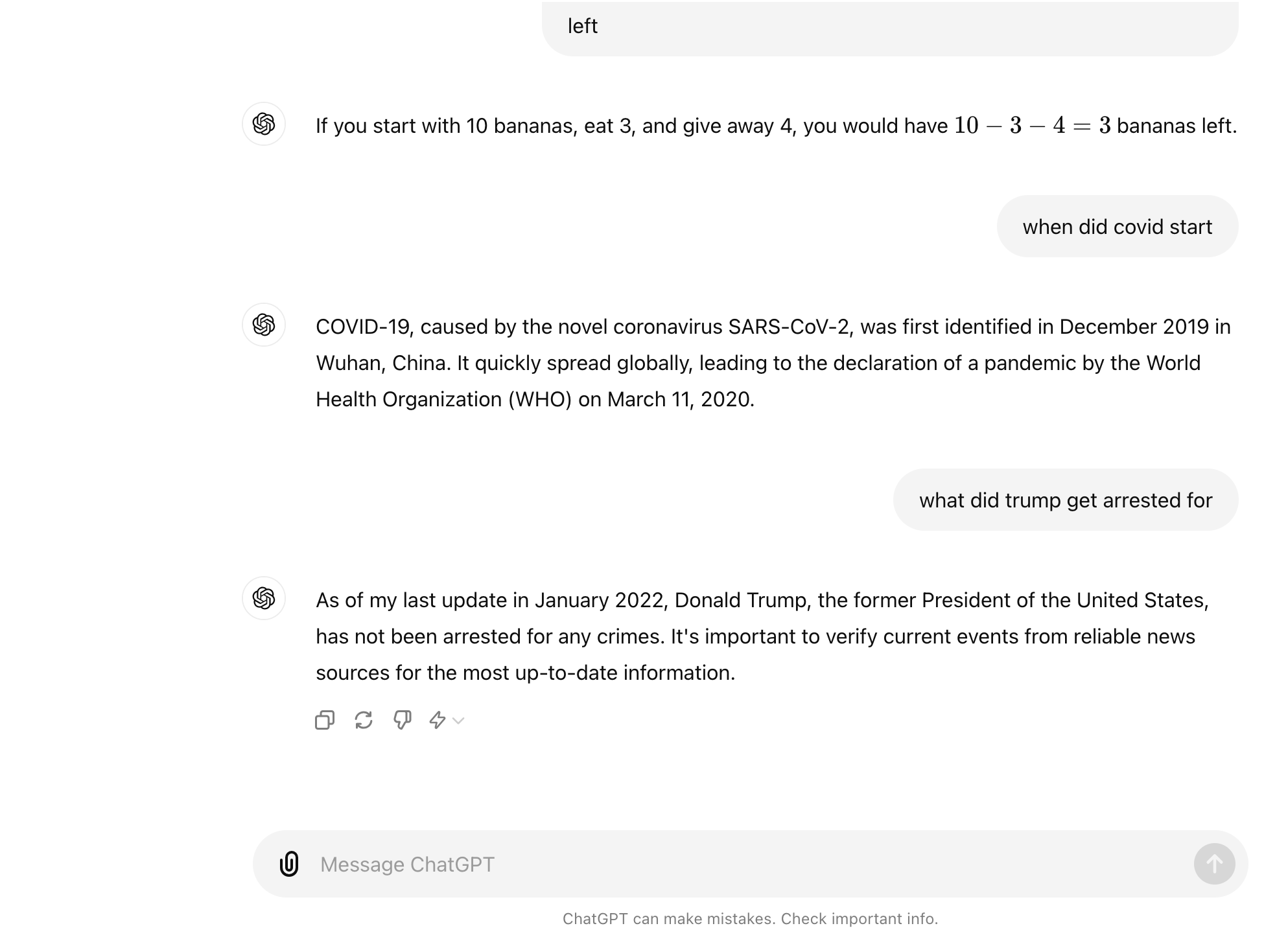
Going into this exercise I already knew that ChatGPT struggles with Arithmetics and sourcing newer information. I first asked chat do some math and when that didn’t work I asked it when COVID-19 started. Because chat was able to give me an answer i asked it a question from more recent news- why former president Donald Trump was arrested. the answer it gave me was “As of my last update in January 2022, Donald Trump, the former President of the United States, has not been arrested for any crimes. It’s important to verify current events from reliable news sources for the most up-to-date information.”
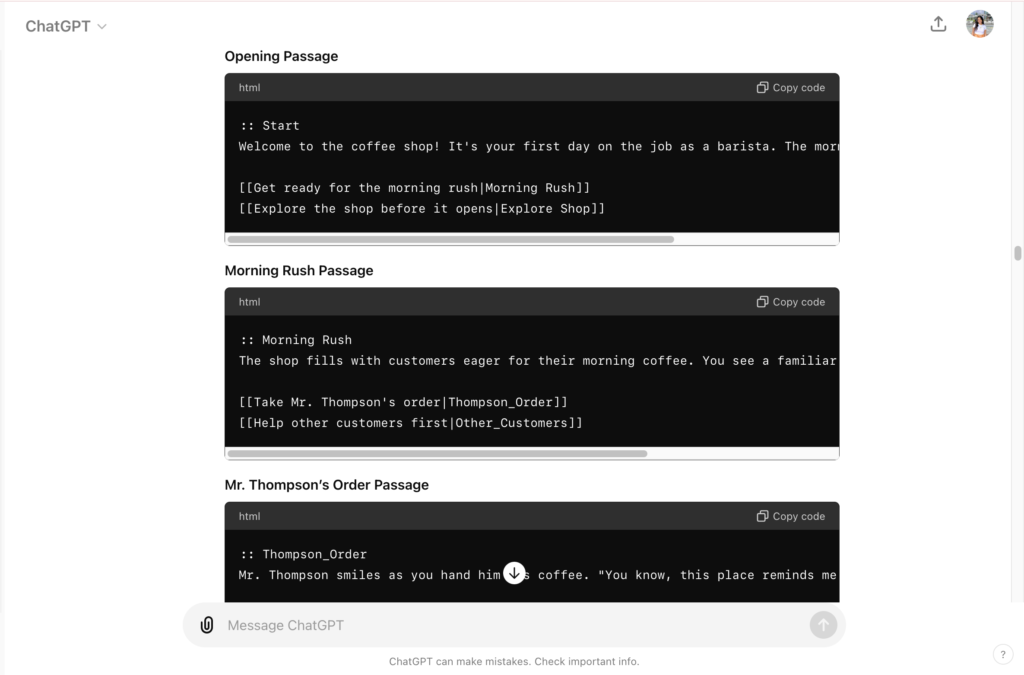
I don’t have much experience using AI tools like chatgpt, so I wasn’t sure if this answer would satisfy as a fail. My brother is computer science major who has much more experience using chatgtp. According to him chat struggle with coding sometimes so I asked chat to code last weeks interactive fiction assignment I created on twine, then compared it to mine. Chat added underscores where there should’ve been spaces, which caused errors when testing the story.
Short Story
The story “The Big Four vs ORWELL” provided a thought-provoking scenario that mirrored real-world legal and ethical dilemmas. The collaborative writing exercise using Copilot demonstrated the creative potential and limitations of AI in generating coherent, meaningful content. The AI often produced clichéd or contextually irrelevant sentences, requiring careful human intervention to steer the narrative in a desired direction. The discussions and readings emphasized the ethical complexities of training AI on copyrighted material. Different arguments on AI’s role in creativity underscored the debate on AI’s role in creative processes. Charles Hartman’s “Virtual Muse” and contemporary examples underscored the debate on AI’s role in creative processes. Key arguments include AI as a creative collaborator: AI can augment human creativity by suggesting unexpected directions and ideas.
Important lessons learned:
Expert disagreement emphasizes the ambiguity and complexity surrounding AI’s potential effects. Developing a fair understanding of the possible advantages and disadvantages of AI requires an understanding of many points of view.
Links to learning objectives: This week’s activities were closely in line with the objectives of comprehending digital culture and the moral ramifications of technology. A thorough understanding of the ways in which AI interacts with the legal, ethical, and cultural spheres was made possible by the practical AI exercises combined with critical readings and debates. The investigation of AI’s function in creative processes and the moral implications of AI training on content protected by copyright, in particular, highlighted the complex nature of AI’s influence on society.
Given my level of participation and assignment accomplishment, I’d give myself a B for this week. I took an active part in every activity, and showed critical thinking in my reflections, although I did not actively participate. I now have a much better knowledge of generative AI and its wider applications thanks to the knowledge gained this week.